7 Chakras — The Seven Energy Centres of Yoga
What Are the 7 Chakras?
The 7 chakras are the seven centres of the subtle body described in the yoga and tantra śāstras: six lotuses strung along the suṣumnā nāḍī from the base of the spine to the point between the eyebrows, crowned by the thousand-petalled lotus at the top of the head. This page explains each chakra from the scriptures, what it governs in the life of a practitioner, and how the Swara Yoga tradition of Rishikesh approaches them through breath, bandha and meditation.
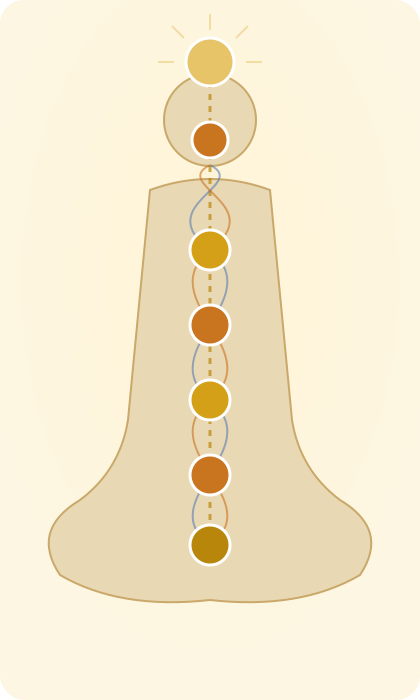
The meaning of the word chakra
Cakra (चक्र) means a wheel or a circle. The scriptures also call these centres padma, a lotus, because each one is pictured as a flower with a fixed number of petals. A chakra is not an organ that can be found by dissection. It is a meeting point in the prāṇamaya kośa, the sheath of vital energy, where nāḍīs converge and where awareness can be gathered in meditation.
The Haṭha Yoga Pradīpikā speaks of seventy-two thousand nāḍīs carrying prāṇa through the body. Three of them are chief: iḍā on the left, piṅgalā on the right and suṣumnā in the centre of the spinal column. The chakras sit along suṣumnā, and iḍā and piṅgalā wind around it, meeting at the centres.
In the śāstra the chakras are stations on the path of awakening, not moods or colours to be adjusted. Their place in sādhanā is to let prāṇa, and with it awareness, rise from the base of the spine to the crown.
Where the teaching of the chakras comes from
The most detailed classical account is the Ṣaṭ-cakra-nirūpaṇa, the Description of the Six Centres, written by Pūrṇānanda in the sixteenth century. For every lotus it gives the place in the body, the number of petals, the element, the seed syllable, the presiding deity and the experience of the yogi who meditates there.
Older texts of haṭha yoga name the same centres. The Gorakṣa Śataka asks how a yogi can succeed who does not know the six chakras in his own body. The Śiva Saṃhitā and the Yoga Upaniṣads, such as the Yoga Cūḍāmaṇi and the Yoga Kuṇḍalī, describe the lotuses along suṣumnā and the rising of kuṇḍalinī through them. The Haṭha Yoga Pradīpikā teaches the means — āsana, prāṇāyāma, bandha and mudrā — that guide prāṇa into suṣumnā.
Why do some books count six chakras and others seven? The classical texts count six, from Mūlādhāra to Ājñā, and treat the thousand-petalled Sahasrāra at the crown as the goal that lies beyond them. Counting the crown lotus together with the six gives the seven chakras known around the world today.
The 7 Chakras at a Glance
For each centre the śāstra gives a place in the body, a number of petals, an element (tattva), a seed syllable (bīja mantra) and a sense. The table follows the Ṣaṭ-cakra-nirūpaṇa.
| Chakra | Place in the body | Petals | Element | Bīja mantra | Sense |
|---|---|---|---|---|---|
| Mūlādhāra | Base of the spine | 4 | Earth | LAṂ | Smell |
| Svādhiṣṭhāna | Root of the genitals | 6 | Water | VAṂ | Taste |
| Maṇipūra | Navel | 10 | Fire | RAṂ | Sight |
| Anāhata | Heart | 12 | Air | YAṂ | Touch |
| Viśuddha | Throat | 16 | Space | HAṂ | Hearing |
| Ājñā | Between the eyebrows | 2 | Mind | OṂ | Inner perception |
| Sahasrāra | Crown of the head | 1000 | Beyond the elements | — | Pure awareness |
The 7 Chakras One by One
What each centre governs is given here as the general teaching of the tradition, as a guide for study and practice.
1. Mūlādhāra — the root support
Mūla means root and ādhāra means support. The lotus of four petals lies at the base of the spine, between the anus and the genitals. Its element is earth, shown as a yellow square, its bīja is LAṂ and its sense is smell. Brahmā presides here with the śakti Ḍākinī, and here kuṇḍalinī rests, coiled three and a half times and asleep.
Mūlādhāra is the foundation: steadiness of body, the instinct to survive, the sense of being safe and supported. When it is steady a person is grounded, patient and able to sit still. When it is disturbed there is fear, restlessness and a body that cannot settle.
Practice: a firm, comfortable seat in an āsana such as siddhāsana, regular hours of sleep and food, and mūla bandha, the root lock, practised under guidance.
2. Svādhiṣṭhāna — one's own abode
Sva means one's own and adhiṣṭhāna means dwelling place. The lotus of six petals lies at the root of the genitals. Its element is water, shown as a white crescent moon, its bīja is VAṂ and its sense is taste. Viṣṇu presides here with the śakti Rākiṇī.
Svādhiṣṭhāna holds the flow of desire, pleasure, creativity and the deep impressions of the mind. When it is balanced, feeling moves freely and creative energy is used well. When it is disturbed there is craving, emotional turbulence or a dull loss of joy.
Practice: moderation in the senses, hip-opening āsanas, and calm, even breathing that softens the emotional tide.
3. Maṇipūra — the city of jewels
Maṇi means jewel and pūra means city. The lotus of ten petals lies at the navel. Its element is fire, shown as a red triangle pointing downward, its bīja is RAṂ and its sense is sight. Rudra presides here with the śakti Lākinī.
Maṇipūra is the seat of the digestive fire and of will. When it is strong there is good digestion, energy, confidence and the power to act. When it is weak or excessive there is sluggish digestion, indecision, anger or a need to control.
Practice: uḍḍiyāna bandha and nauli, kapālabhāti for cleansing, and awareness held at the navel during the breath.
4. Anāhata — the unstruck
Anāhata means unstruck, after the inner sound that is heard without any two things striking. The lotus of twelve petals lies at the heart. Its element is air, shown as a six-pointed star of smoky colour, its bīja is YAṂ and its sense is touch. Īśa presides here with the śakti Kākinī.
Anāhata is the centre of love, compassion and devotion. When it opens the heart is steady and generous and the mind rests in kindness. When it is closed there is grief, loneliness, resentment or a love that clings.
Practice: nāḍī śodhana prāṇāyāma, bhrāmarī with a low hum that is felt in the chest, and devotion — prayer, kīrtana and service.
5. Viśuddha — the purifier
Viśuddha means especially pure. The lotus of sixteen petals lies at the throat. Its element is space (ākāśa), shown as a white circle like the full moon, its bīja is HAṂ and its sense is hearing. Sadāśiva presides here with the śakti Śākinī.
Viśuddha governs speech, sound and the ability to receive what is true. When it is clear a person speaks honestly and listens well. When it is disturbed there is either silence where words are needed, or speech that is harsh and careless.
Practice: jālandhara bandha, ujjāyī breathing, chanting of mantra and the discipline of truthful speech.
6. Ājñā — the seat of command
Ājñā means command, for here the yogi receives the guidance of the guru from within. The lotus of two petals, white like the moon, lies between the eyebrows. It is beyond the five elements; it is the seat of the mind, and its seed is the praṇava OṂ. Iḍā and piṅgalā meet suṣumnā here, and Paramaśiva presides with the śakti Hākinī.
Ājñā is the centre of concentration, intuition and clear seeing. When it is awake the mind is one-pointed and decisions come from understanding. When it is clouded there is confusion, scattered thought and dependence on the opinions of others.
Practice: trāṭaka on a steady flame, bhrāmarī with the vibration felt in the forehead, and śāmbhavī mudrā, the gaze at the eyebrow centre.
7. Sahasrāra — the thousand-petalled lotus
Sahasra means a thousand. The lotus of a thousand petals is above the crown of the head and is beyond the elements and the senses. The Ṣaṭ-cakra-nirūpaṇa describes it as the abode of Śiva, where kuṇḍalinī, having passed through all six centres, unites with pure consciousness.
Sahasrāra is not a centre to be worked on like the others. It is the fulfilment of the whole path: the meeting of Śiva and Śakti, called samādhi, in which the separate self dissolves.
Practice: meditation, surrender and the guidance of a realised teacher. The scriptures are clear that this awakening comes by grace and steady sādhanā, not by force.
Kuṇḍalinī and the Rising of Prāṇa through the 7 Chakras
Kuṇḍalinī, the coiled one, is the power of consciousness resting at Mūlādhāra. The texts of haṭha yoga describe how, when the nāḍīs are pure and prāṇa enters suṣumnā, she awakens and rises through each lotus in turn, and each lotus is said to turn upward as she passes.
The Haṭha Yoga Pradīpikā also speaks of three knots, the granthis of Brahmā, Viṣṇu and Rudra, which prāṇa must pierce on its way upward. They stand for the pull of the body, of the emotions and of the subtle mind, which hold awareness in its usual places.
This is why the tradition puts purification first. The Haṭha Yoga Pradīpikā says that prāṇa cannot enter suṣumnā while the nāḍīs are full of impurity. Cleansing, prāṇāyāma and steady meditation prepare the ground, and the rest follows in its own time.
How to Balance the 7 Chakras Safely
In the Swara Yoga tradition the chakras are not opened one by one with techniques of their own. The breath is purified first, and the centres find their balance as prāṇa begins to flow evenly. The practices below are taught in that order.
- Ṣaṭkarma: the six cleansing actions, such as neti and kapālabhāti, remove what blocks the flow of prāṇa.
- Āsana: a steady seat and a supple spine let the body sit still for prāṇāyāma and meditation.
- Nāḍī śodhana: alternate-nostril breathing balances iḍā and piṅgalā, the first step towards suṣumnā.
- Bandha: mūla, uḍḍiyāna and jālandhara bandha hold prāṇa at the root, the navel and the throat.
- Bhrāmarī: the humming breath stills the mind and is felt at the heart, throat and forehead.
- Trāṭaka and dhāraṇā: steady gazing and concentration gather the scattered mind at the eyebrow centre.
- Mantra: the bīja syllables and the praṇava, repeated with attention, are an ancient way of meditating on each centre.
- Yama and niyama: truthfulness, non-harming, contentment and self-study keep the gains of practice steady.
Practise gently and regularly. Strong breathing and long retentions should be learnt from a qualified teacher, and anyone with high blood pressure, heart disease, pregnancy or a history of mental illness should seek advice first. Chakra practice is a spiritual discipline and is not a substitute for medical care.
The Chakras in Swara Yoga
The Śiva Svarodaya, the root text of Swara Yoga, teaches that the breath does not flow equally through both nostrils. It moves between iḍā and piṅgalā through the day and night, and when it flows through suṣumnā the mind turns naturally inward. That inward flow is the doorway to the chakras.
For this reason the Swara Yoga Peeth teaches observation of the breath before chakra meditation. A student first learns to know which nostril is flowing, to purify the nāḍīs and to sit in stillness. Work with the centres then rests on a breath that is already balanced, instead of on imagination alone.
Common Misunderstandings about the Chakras
- The rainbow colours, from red at the root to violet at the crown, are a modern scheme. The Ṣaṭ-cakra-nirūpaṇa gives other colours; it describes the navel lotus as the colour of a rain cloud and the eyebrow lotus as white like the moon.
- Linking each chakra with a gland or a nerve plexus is a modern comparison that can help study, but the scriptures describe the chakras in the subtle body, not as physical structures.
- The texts speak of purifying the nāḍīs and piercing the granthis rather than of blocked chakras. What needs attention is the flow of prāṇa and the state of the mind.
- Awakening is not an experience to be chased. The scriptures place it at the end of a long sādhanā of discipline, purification and devotion.
Frequently Asked Questions about the 7 Chakras
What are the names of the 7 chakras in order?
From the base upward: Mūlādhāra, Svādhiṣṭhāna, Maṇipūra, Anāhata, Viśuddha, Ājñā and Sahasrāra.
Which scripture describes the chakras in detail?
The Ṣaṭ-cakra-nirūpaṇa of Pūrṇānanda gives the fullest account. The Gorakṣa Śataka, the Śiva Saṃhitā, the Haṭha Yoga Pradīpikā and the Yoga Upaniṣads also teach about the centres and the rising of kuṇḍalinī.
Are there six chakras or seven?
The classical texts count six chakras and treat Sahasrāra at the crown as the goal beyond them. Together they make the seven centres taught today.
What is a bīja mantra?
A bīja, or seed, is a one-syllable mantra linked to a centre and its element: LAṂ, VAṂ, RAṂ, YAṂ and HAṂ for the five lower chakras, and OṂ for Ājñā. It is repeated with attention fixed at the centre.
How can I balance my chakras?
Begin with the breath: cleansing, a steady āsana, nāḍī śodhana and meditation. Add the bandhas, bhrāmarī and trāṭaka under the guidance of a teacher, and keep a regular, moderate life.
Is it safe to awaken kuṇḍalinī by myself?
The tradition advises against forcing it. Intensive practices are learnt step by step from an experienced teacher, after the body and the nāḍīs have been purified.
How are the chakras connected with the breath?
Prāṇa travels through the nāḍīs, and the chakras lie on the central nāḍī, suṣumnā. When the breath flows evenly, prāṇa can enter suṣumnā, and this is why Swara Yoga begins with knowing the breath.
षट्चक्रं षोडशाधारं त्रिलक्ष्यं व्योमपञ्चकम् । स्वदेहे ये न जानन्ति कथं सिध्यन्ति योगिनः ॥
How can those yogis succeed who do not know, in their own body, the six chakras, the sixteen supports, the three objects of attention and the five spaces?
— Gorakṣa Śataka
Begin with the breath
Learn the practices that purify the nāḍīs and prepare the way for the chakras, step by step, with Swara Yoga Peeth, Rishikesh.
Pranayama The Three Bandhas Nadi & Tattva Panch Kosha CoursesPublished 2 November 2026. Reviewed by Swara Yoga Peeth, Rishikesh; next review May 2027.